Aug 16, 2026 | Posted by Matt Elson
Before True North Manufacturing Inc. existed, the thinking behind it started in the field.
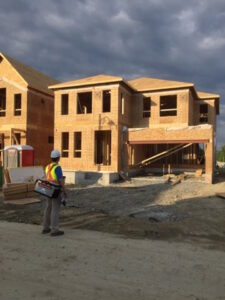
The early work was not about proving a manufacturing theory. It was about going to see residential construction directly and trying to understand the actual work.
What stood out was not a lack of effort.
It was not a lack of skill.
It was the amount of effort being consumed by the system around the work.
Waiting.
Searching.
Adjusting.
Working around site conditions.
Finding problems late.
Making decisions at the point of installation that should have been resolved much earlier.
Capable people were often being forced to overcome weak process design.
That observation matters because it points to one of the biggest opportunities in construction: improving the value chain before the work reaches site.
Industrialized construction is often presented as a technology problem.
More equipment.
More automation.
More software.
More capital.
More complexity.
But automation does not automatically create improvement.
If the work is poorly understood, automation will not fix it.
If the value chain is disconnected, equipment will not fix it.
If design, supply, fabrication, delivery, and site execution are not coordinated, capital spending will not fix it.
In many cases, technology simply makes the existing problems more expensive.
This is the same trap many manufacturing companies have fallen into over the years: investing heavily in complex automation before stabilizing the process, clarifying the standard, improving flow, and developing people who can see and solve problems.
The equipment may look impressive.
The business model may not improve.
A better approach starts with the fundamentals.
Understand the work.
See the real condition.
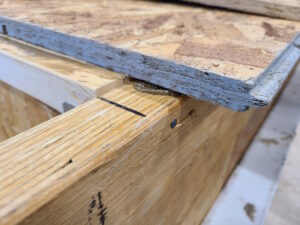
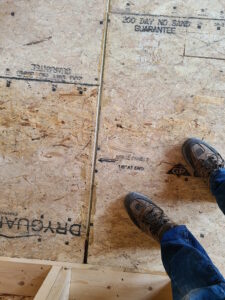
Identify where waiting, rework, motion, overprocessing, defects, unevenness, and overburden are being created.
Ask where decisions are being made too late.
Ask where problems are being pushed downstream.
Ask where the site is being forced to absorb variation that could have been reduced earlier.
From there, the opportunity becomes much clearer.
Move the right work upstream.
Improve coordination earlier.
Build assemblies in a more controlled process.
Reduce avoidable site variation.
Support trades with better starting conditions.
Create clearer standards.
Build quality into the process instead of relying on inspection and correction after the fact.
The real potential of industrialized construction is not simply moving work indoors.
It is improving how the full construction value chain functions.
Design.
Engineering.
Procurement.
Supply chain.
Fabrication.
Delivery.
Installation.
Site execution.
When those pieces are disconnected, problems move downstream.
When those pieces are integrated, the project has a better chance of moving with speed, quality, and predictability.
That is where manufacturing thinking can make a meaningful difference in housing and construction.
Not by replacing construction.
Not by dismissing skilled trades.
Not by assuming that a factory automatically solves site problems.
But by building a better process around the work.
For leaders considering industrialized construction, the question should not be, “How much automation can we buy?”
The better questions are:
What work do we actually understand?
Where is the value chain breaking down?
Where is variation being created?
Where are problems being discovered too late?
Where are people being overburdened by poor process design?
What can be stabilized before we scale?
Technology may eventually play an important role.
But it should follow understanding.
It should support a better process.
It should not be used to cover up a bad one.
Industrialized construction does not need to start with laser beams and disco balls.
It needs to start with going to see, understanding the work, developing people, and building a process that can improve over time.
That is the opportunity.
And that is the work.


